At a glance
01Key places
Khas Bagh, Jaipur
Where we stay and celebrate for the wedding days.
Village Natata, Kunda, Amer, Jaipur, Rajasthan 302028
Google Maps · khasbagh.com · +91 141 493 7033
CSOI, reception in Delhi
The Sunday reception, 27 September.
Civil Services Officers' Institute, Vinay Marg, Chanakyapuri, New Delhi 110021
Google Maps · csoi.in · +91 11 2419 5300
ELIVAAS Villas, Kasauli
The mountain days after the wedding.
Fleurdilis Estate, Village Chattyan, Mandir Road, Nahari, Kasauli, Himachal Pradesh 173204
Google Maps · elivaas.com · +91 79 6931 6140
02Cash
100 rupees is roughly one euro. Cards work in hotels and bigger restaurants, but it is handy to have some cash on you for tips, small shops, autos (other name for tuk-tuk) and the bazaars.
Get it from an ATM once you are through immigration and have picked up your bags. The first ATM machines you pass are on your left before you exit the airport (SBI and IndusInd) and there is another IndusInd ATM to your right after you exit the airport.
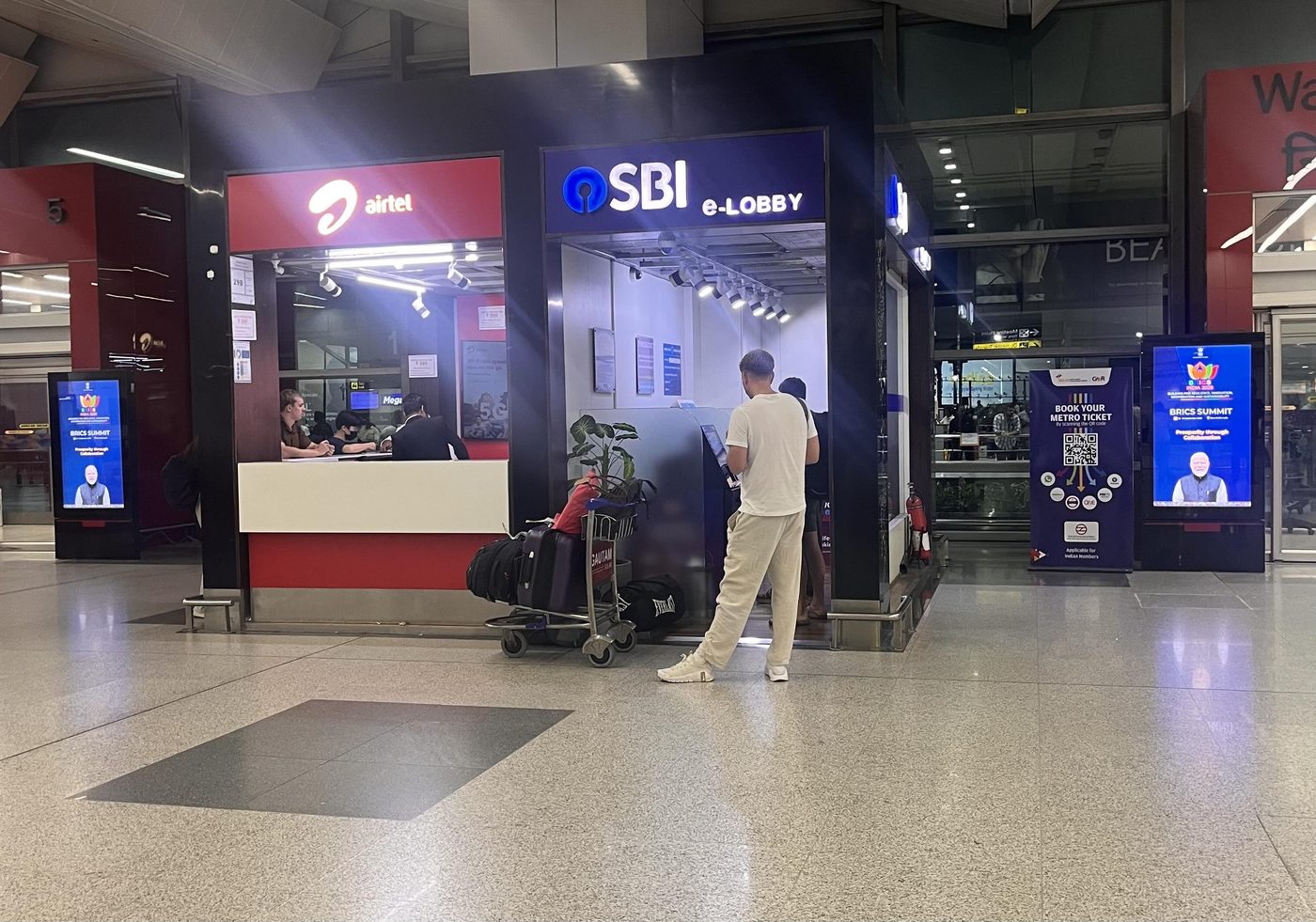
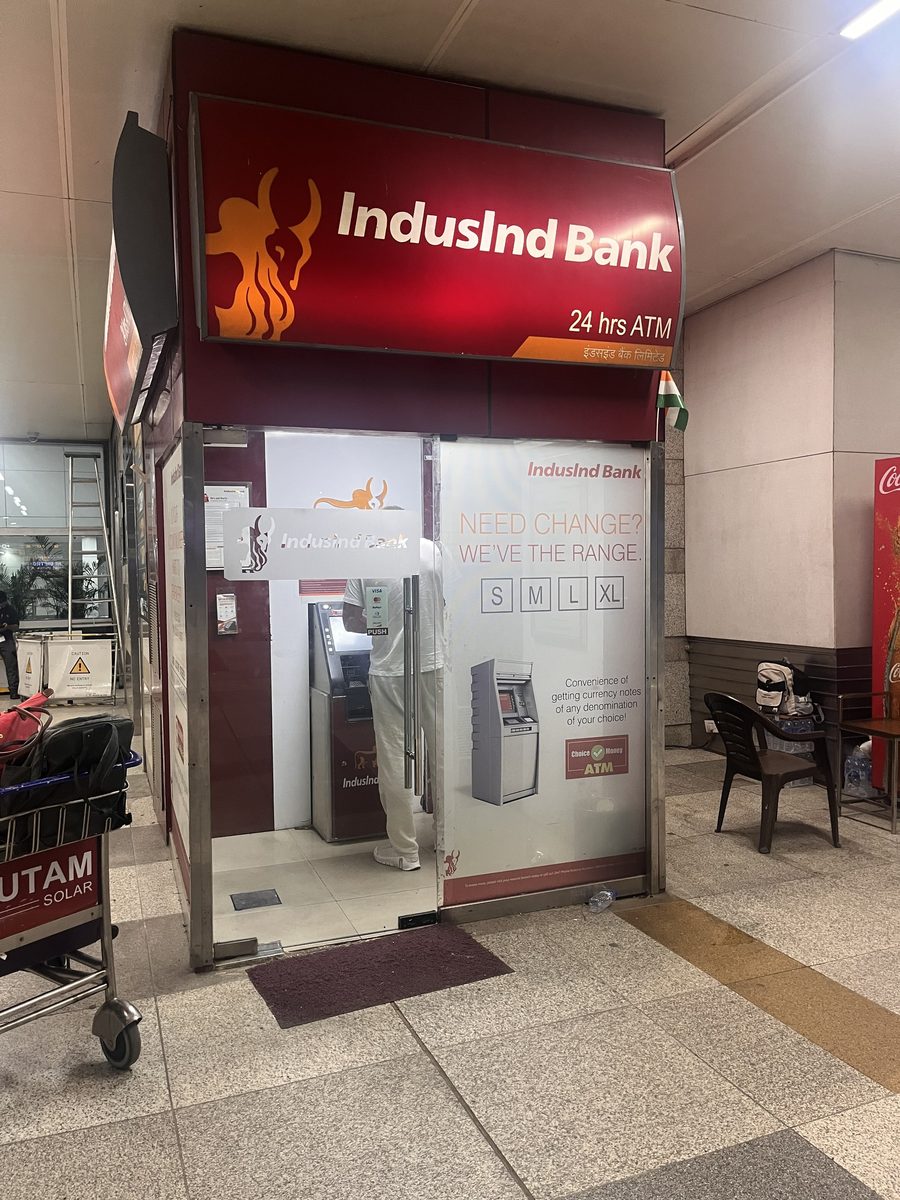
The first machines you pass can be busy or out of order, so it's worth then stepping outside and using the ATM outside the airport. No need to hurry over it, your driver will be waiting. Most ATMs cap a single withdrawal at 10,000 rupees (about 100 euro). Skip the money exchange counters in arrivals.
Besides that you will find ATMs everywhere where we travel, and you can withdraw cash from them.
03Tipping
Tipping is normal and appreciated, and the amounts are small.
- A single service (porter, a hand with bags, someone who has helped you out): 100 to 400 rupees is generous and kind.
- Restaurants: around 10 percent, unless a service charge is already on the bill.
- Our Jaipur drivers, who are with us from the 20th to the 26th: around 500 rupees per passenger for the whole week.
- In Kasauli, where we book cars as we need them, just round up. For a full-day booking, 200 to 300 rupees.
04Water and food
Nothing here is cause for worry, and the food is one of the best parts of the trip. A few habits are worth having.
- Avoid tap water. Stick to bottled water or RO water. For bottled water, check the seal is unbroken when it reaches you. It is cheap and sold everywhere. RO stands for reverse osmosis, a filtering system that is standard in Indian homes, hotels and restaurants. In restaurants, you can also ask for RO water. It is an entirely normal request.
- Ice. Leave it out by default. In hotels and good restaurants it is usually made from RO water, and you can simply ask whether it is. Anywhere else, it is the easiest thing to skip.
- Raw things. Outside Khas Bagh, the villas and the Delhi reception, it is worth skipping raw salad and uncooked garnishes. Anything cooked, fried or boiled is fine, as is fruit you peel yourself.
- Busy is good. A place with plenty of customers has food that has not been standing around. Street food is not off limits at all, and some of it is wonderful. Just ask Kriti's family, your driver or the hotel staff which places are the good ones.
05Plugs and sockets
Your European plug fits, so there is no adapter to buy. Indian sockets have a safety shutter, so if the plug will not go in, press a pen into the top hole and the two below it will open up.
06What to wear day to day
Nothing here is a rule, and nobody is going to mind what you wear.
The one thing worth knowing is that outside hotels and tourist sites, sleeveless tops and shorter skirts are less common than at home, so in the old city bazaars you may notice a few more looks than you are used to. It is a question of feeling comfortable rather than of doing anything wrong. If you would rather not have that, a top with sleeves does the job, and a scarf or stole draped over the shoulders works just as well. Monday morning's shopping trip is a nice moment to pick one up if you fancy it.
At a couple of the sightseeing spots, and at the Shiv temple in Kasauli, covered shoulders and knees is the kinder choice, and shoes come off at the entrance.
At Khas Bagh and at the reception, wear whatever you like. See the clothing guide for the wedding days.
07Getting around
For the first week in Jaipur, from the 20th to the 26th, we have cabs that stay with us in groups of four, including the drive from Delhi to Jaipur and back. Nothing to arrange and no need for Uber in that time.
At the airport your driver will ask you for a small amount in cash to cover the parking fee. They should show you the receipt for it.
From the evening of the 26th onwards, Uber is the easy option in Delhi. You will also want it on the 28th to reach the airport or Delhi Cantt railway station for the train up to Kasauli, and on 3 October from Gurgaon railway station to dinner and afterwards to the airport. The account is worth setting up before you travel rather than on arrival, and Travel info covers how.
08A few words of Hindi
Not needed, English gets you everywhere on this trip. Just nice to use.
- Namaste (na-mas-te). Hello, and also goodbye.
- Khamma Ghani (kamma ga-ni). The Rajasthani greeting, for Jaipur.
- Dhanyavaad (dhan-ja-waad). Thank you.
- Haan (haa, the ending only nasal, no hard n). Yes.
- Nahin (na-hii, the ending only nasal, no hard n). No.
- Theek hai (thiik he). Okay, that's fine.